
How to Book Accommodation for Employees Working Away from Home
When employees need to work away from home—whether for a short project, long-term contract, or relocation—booking the right accommodation becomes more than just an admin task. It directly impacts productivity, wellbeing, and overall project success.
Across the United Kingdom, businesses are increasingly moving away from last-minute hotel bookings and adopting a more strategic approach to corporate accommodation.
In this guide, we’ll walk you through how to book accommodation for employees working away from home, including what to consider, common mistakes to avoid, and how to get the best value for your business.
Quick Answer: What’s the Best Approach?
The most effective way to book accommodation for employees is to:
- Choose the right type of accommodation (often serviced accommodation)
- Book based on the length and purpose of the stay
- Consider total cost, not just nightly rates
- Plan ahead while allowing flexibility
Getting these fundamentals right can significantly improve both cost efficiency and employee experience.
Step 1: Understand the Type of Stay
Before booking anything, it’s important to understand the nature of the trip. Not all work stays are the same, and choosing the wrong type of accommodation often leads to unnecessary costs or неуд неуд неуд (typo?) — fix.
Let me correct.
Not all work stays are the same, and choosing the wrong type of accommodation often leads to unnecessary costs or poor experiences.
Start by asking:
- How long will the employee be staying?
- Are they working alone or as part of a team?
- Will they need space to work remotely?
- Is this a one-off trip or an ongoing project?
For short, one- or two-night stays, hotels can be suitable. But for anything longer, especially project-based work, serviced accommodation is usually a better fit.
Step 2: Choose the Right Type of Accommodation
The type of accommodation you choose has the biggest impact on both cost and comfort.
Hotels are often the default option because they’re easy to book. However, they’re designed for short stays and can become expensive and restrictive over time.
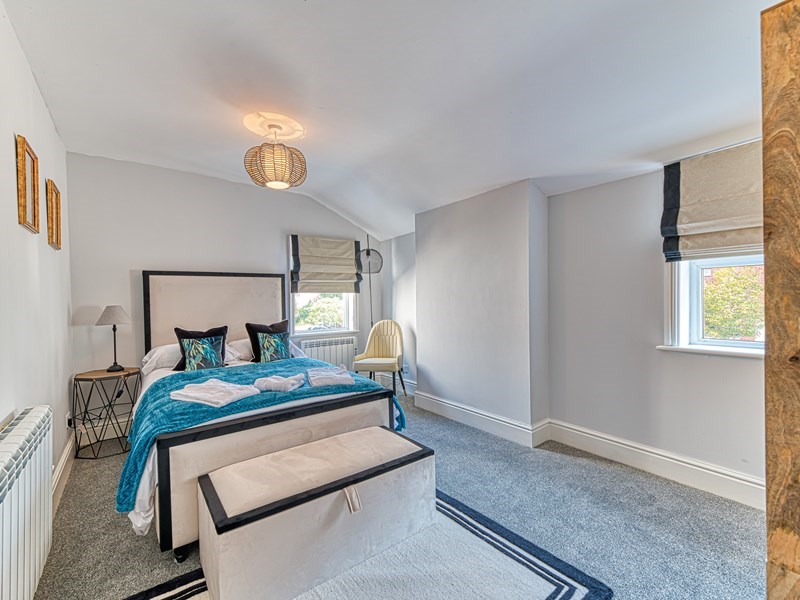
Serviced accommodation offers a more practical alternative. Employees get a fully furnished space with a kitchen, living area, and more room to relax. This makes it particularly suitable for longer stays or repeat bookings.
Other options—such as guesthouses or house shares—may be cheaper in some cases, but they often lack the consistency and flexibility required for business use.
In most scenarios, serviced accommodation provides the best balance between professionalism, comfort, and cost-efficiency.
Step 3: Select the Right Location
Location is just as important as the accommodation itself. A poor choice can lead to longer commutes, higher travel costs, and unnecessary stress for employees.
Ideally, accommodation should be:
- Close to the work site
- Well connected by transport links
- Near essential amenities like shops and restaurants
While city centre locations may seem appealing, they’re not always the most practical or cost-effective option—especially if the work site is elsewhere.
Choosing the right location can reduce daily travel time and improve the overall experience for employees working away.

Step 4: Consider the Total Cost (Not Just the Nightly Rate)
One of the most common mistakes businesses make is focusing solely on the nightly rate.
Hotels may appear competitive at first, but additional costs—such as meals, laundry, parking, and extended stays—can quickly increase the total spend.
Serviced accommodation typically includes many of these essentials in one price, making it easier to manage budgets and avoid unexpected expenses.
When comparing options, always look at the full cost of the stay, not just the headline price.
Step 5: Book Smart for Teams
If multiple employees are working on the same project, booking them individually into hotel rooms can be both expensive and inefficient.
A more effective approach is to book larger serviced accommodation properties where teams can stay together. This reduces the cost per person and makes coordination much easier.
It also creates a more comfortable and sociable environment, which can be particularly beneficial during longer assignments.
Step 6: Plan Ahead and Secure Better Rates
Booking accommodation in advance is one of the simplest ways to reduce costs and improve availability.
Across the United Kingdom, demand for quality accommodation can fluctuate depending on location and season. Last-minute bookings often mean higher prices and fewer options.
By planning ahead, businesses can:
- Secure better rates
- Access higher-quality properties
- Avoid unnecessary stress
At the same time, it’s important to choose providers that offer flexibility in case project timelines change.

Step 7: Work with a Trusted Accommodation Provider
Rather than booking through multiple platforms each time, many businesses benefit from working directly with a serviced accommodation provider.
This approach offers:
- Consistent quality across bookings
- Faster, more streamlined processes
- Access to corporate rates
- Ongoing support if plans change
Building a relationship with a provider can save both time and money in the long run—especially for companies that regularly book accommodation.
Step 8: Balance Cost with Employee Wellbeing
While it’s important to manage budgets, the cheapest option isn’t always the best.
Employees working away from home need a space where they can properly relax after work. Poor-quality accommodation can lead to discomfort, reduced productivity, and lower morale.
Providing a comfortable, well-equipped environment helps employees perform better and makes longer stays more manageable.
In many cases, serviced accommodation delivers this balance more effectively than other options.
Common Mistakes to Avoid
Even experienced businesses can fall into common traps when booking accommodation. These include:
- Booking purely based on price rather than value
- Choosing locations that increase commute times
- Relying on hotels for long-term stays
- Leaving bookings too late
- Not considering employee comfort
Avoiding these mistakes can make a significant difference to both cost and overall experience.

Final Thoughts
Booking accommodation for employees working away from home requires more than a quick online search. It’s about making informed decisions that balance cost, practicality, and comfort.
Across the United Kingdom, businesses that take a more strategic approach—particularly by using serviced accommodation—tend to achieve better outcomes for both their teams and their budgets.
With the right planning and provider, the process becomes simpler, more efficient, and far more cost-effective.
📞 Need Help Booking Accommodation for Your Team?
At Guestz, we specialise in helping businesses across the United Kingdom find high-quality serviced accommodation for employees working away from home.
Whether you’re booking for an individual or an entire team, we provide flexible, reliable solutions designed around your needs.
👉 Get in touch today to discuss your requirements.